

Blue Moon (2025)
An excellent study of a genius the director can’t bring himself to love.

Blue Moon (2025)
dir. Richard Linklater
⭐⭐⭐⭐⭐⭐⭐
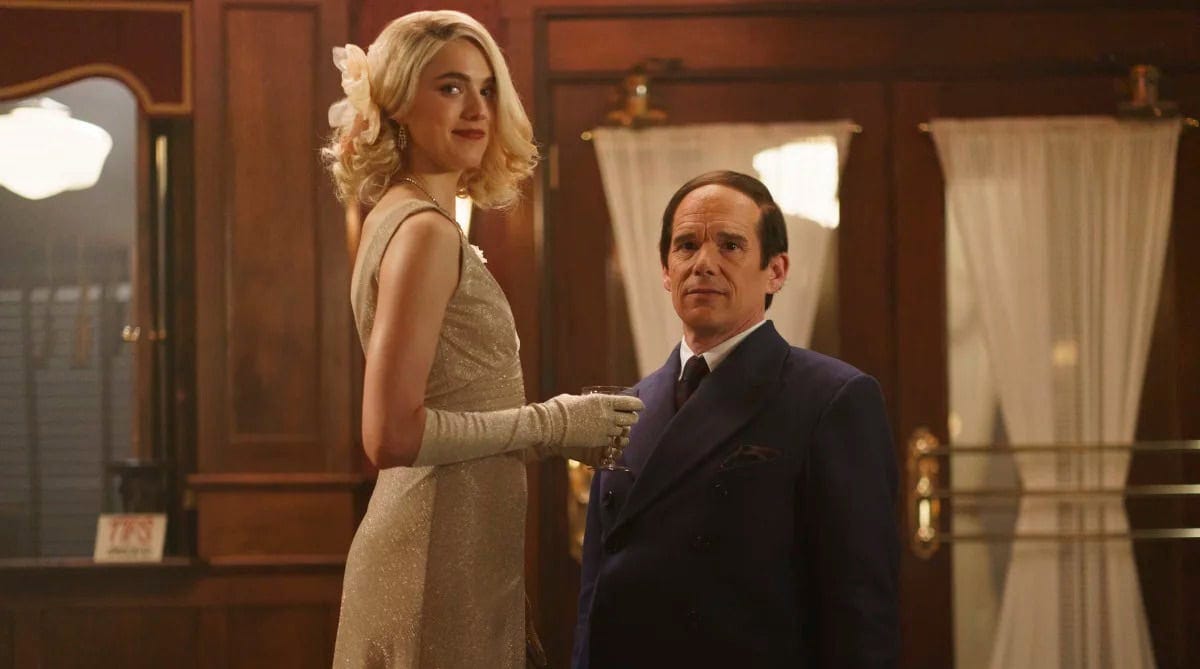
Lorenz Hart spent his whole life trying to craft perfect lines. Richard Linklater, a more gifted writer, hawks over those lines in Blue Moon before swooping down to scatter them into oblivion. There’s a tension between the reverence for Hart’s wit and works and the discomfort with the man behind it which defines the film. It’s exquisitely written, beautifully acted, and emotionally resonant. Yet while it circles Hart with intelligence and deliberation, it stops short of the emotional generosity that could have lifted the movie from excellent to aching.
Blue Moon unfolds over a single night in March 1943, largely confined to the backroom of a New York City restaurant, where lyricist Lorenz Hart (Ethan Hawke) drinks, jokes, deflects, and unravels as the Broadway world around him moves on. Friends, mentees like Elizabeth Weiland (Margaret Qualley), and his former partner Richard Rodgers (Andrew Scott) drift in and out of the room. More devastatingly, the latter’s new partnership with Oscar Hammerstein II (Simon Delaney) forces Hart to reckon with the fact that, ultimately, he might have just been the B-side of a songwriting duo known for a handful of melancholy standards that history politely upgraded into fixtures.
I wish the film had more love for Lorenz Hart. Ethan Hawke, in a phenomenal performance that the Academy would be fools to snub, plays him with heart and fondness. Linklater does not. He’s careful to compose Hart in frames that exaggerate his narrow stature and his Norwooding. When the supporting cast ushers him with compliments, even earnest and eloquent ones, the movie plays them off as eulogies. Every character thinks they spend a little too much time with Hart. In a sense, the one-room concept forces us to spend a little too much time with him.
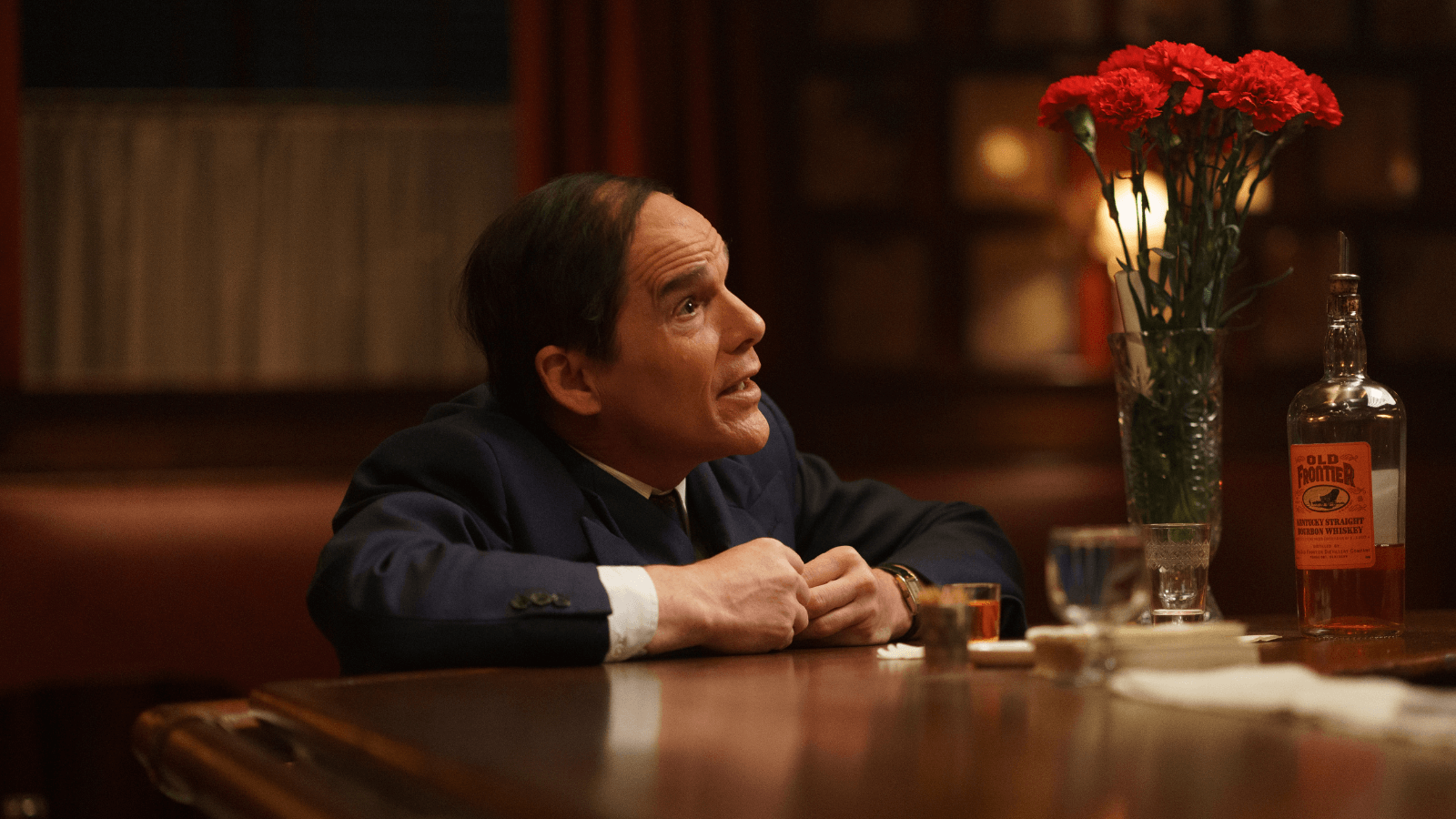
Still, I never grew tired of Hart. As Elizabeth surmises, we still love him -- just not in that way. Hawke’s performance and Kaplow’s spellbinding dialogue keep us hooked with Hart. It’s just that Linklater has had a deeper affection for all his protagonists, whether they be the limerent wanderers of the Before trilogy or the zany misfits of School of Rock. Why doesn’t he extend that same affection to Lorenz Hart? Is it because he feels no kinship with him? Linklater certainly isn’t aging out of his prime1, and his long-term partnership with Ethan Hawke is evidently as strong as ever. Consciously or subconsciously, Linklater tries to distance himself from Hart, and that holds back an otherwise excellent biopic from transcending into something profound about love and art.
For a film about Hart, Andrew Scott and the unforgettable Margaret Qualley are almost as impactful. Qualley imbues Elizabeth with a composed surface and gives Hart a look that’s a little pitiful and a lot reverential — it’s a look that only a woman in love with your mind and only your mind can give you2. If there’s any criticism of her, it’s that she’s not in the film enough. When Hart waxes poetic about Elizabeth, we long to glimpse the beauty that so enchants this great appreciator of it. And of course, few films have suffered from having too much Qualley.
On the other side, Andrew Scott’s Richard Rodgers has a lot of fine, understated power. Scott plays Rodgers with as much reverence for Hart as Elizabeth, just mixed in with a serving of resentment. Despite lapping up our protagonist commercially, Rodgers is cleverly never portrayed as villain. After all, he is friend, collaborator, betrayer, and benefactor to Hart. In a sense, Scott’s multifaceted performance underscores the tragedy of the film. Instead of exploding, Scott just shifts subtly when Hart’s ragebait gnaws at his professional pride. It’s an incredible dynamic that has a lot to say about creative partnerships and regret. The film doesn’t always get there, but when it does, it’s often because of Scott.
In the end, Blue Moon resonates because of the performers in the backroom that see Hart clearly, if not always kindly. Hawke gives Hart the warmth the film sometimes withholds and Scott’s Rodgers crystallises the film’s ideas about partnership and resentment with remarkable restraint. Linklater’s uncharacteristic coolness may deny the film a final, shattering release, but his characteristic openness allows those performances to speak with clarity. However distant Linklater may be from Hart, he stays close enough to allow him the dignity of being heard before the room finally empties.
Someone who feels the urgency of time would not produce Hit Man.
I am intimately familiar with this look.